Real estate has long been one of the most trusted ways to build wealth. But when most people think about investing in real estate, they picture buying rental homes, finding tenants, collecting rent, and maintaining properties.
There’s another path that many investors overlook—tax lien investing.
Both strategies involve real estate, yet they are fundamentally different in how they generate returns, the amount of work involved, and the level of capital required. Understanding these differences can help you determine which approach better fits your financial goals and lifestyle.
Rental Property Investing: The Traditional Route
Owning rental property has helped countless investors build long-term wealth. The concept is simple: purchase a property, rent it to tenants, collect monthly income, and hopefully benefit from appreciation over time.
When everything goes well, rental properties can provide:
- Monthly rental income
- Long-term property appreciation
- Tax advantages
- Equity growth as mortgages are paid down
However, rental ownership also comes with ongoing responsibilities. Investors often find themselves managing repairs, handling tenant issues, paying insurance, maintaining the property, and dealing with vacancies.
While many investors enjoy being landlords, others discover that owning rental property requires far more time than they originally expected.
Tax Lien Investing: A Different Approach
Tax lien investing takes an entirely different path.
Instead of purchasing the property itself, investors purchase the unpaid property tax debt secured by that property. The county receives the overdue taxes immediately, while the investor receives a tax lien certificate.
If the property owner redeems the lien, the investor generally receives the original investment plus interest according to local laws.
If the owner fails to redeem within the legally established redemption period, some jurisdictions may allow the investor to begin foreclosure proceedings, subject to state and local regulations.
Rather than collecting rent each month, tax lien investors focus on earning returns through statutory interest and, in some cases, potential property acquisition.
Comparing the Two Strategies
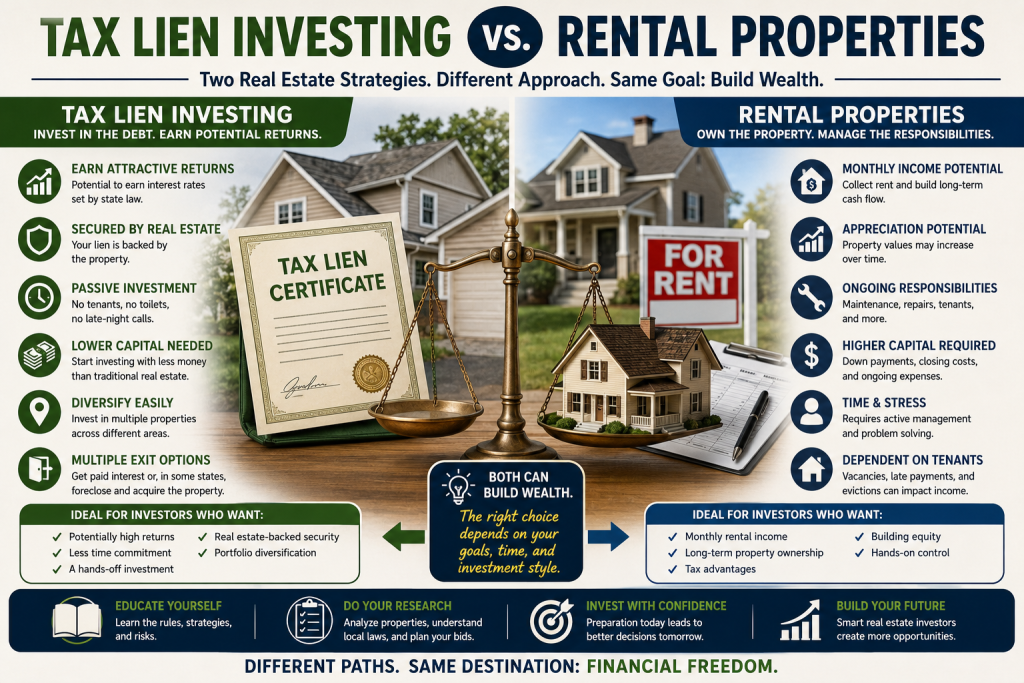
Although both involve real estate, they appeal to different types of investors.
Rental Property Investors Often Prefer:
- Monthly cash flow from rent
- Long-term appreciation
- Hands-on property ownership
- Building a portfolio of physical assets
Tax Lien Investors Often Prefer:
- No tenants to manage
- No property maintenance
- No rent collection
- Investment backed by real estate collateral
- The ability to diversify across multiple liens
Neither strategy is universally better. The right choice depends on your goals, available time, and investment style.
Capital Requirements
One reason many beginners become interested in tax liens is accessibility.
Purchasing a rental property often requires a substantial down payment, financing approval, closing costs, insurance, and ongoing maintenance expenses.
Tax lien certificates, depending on the jurisdiction, can often be purchased for significantly smaller amounts, allowing investors to begin with less capital while learning the process.
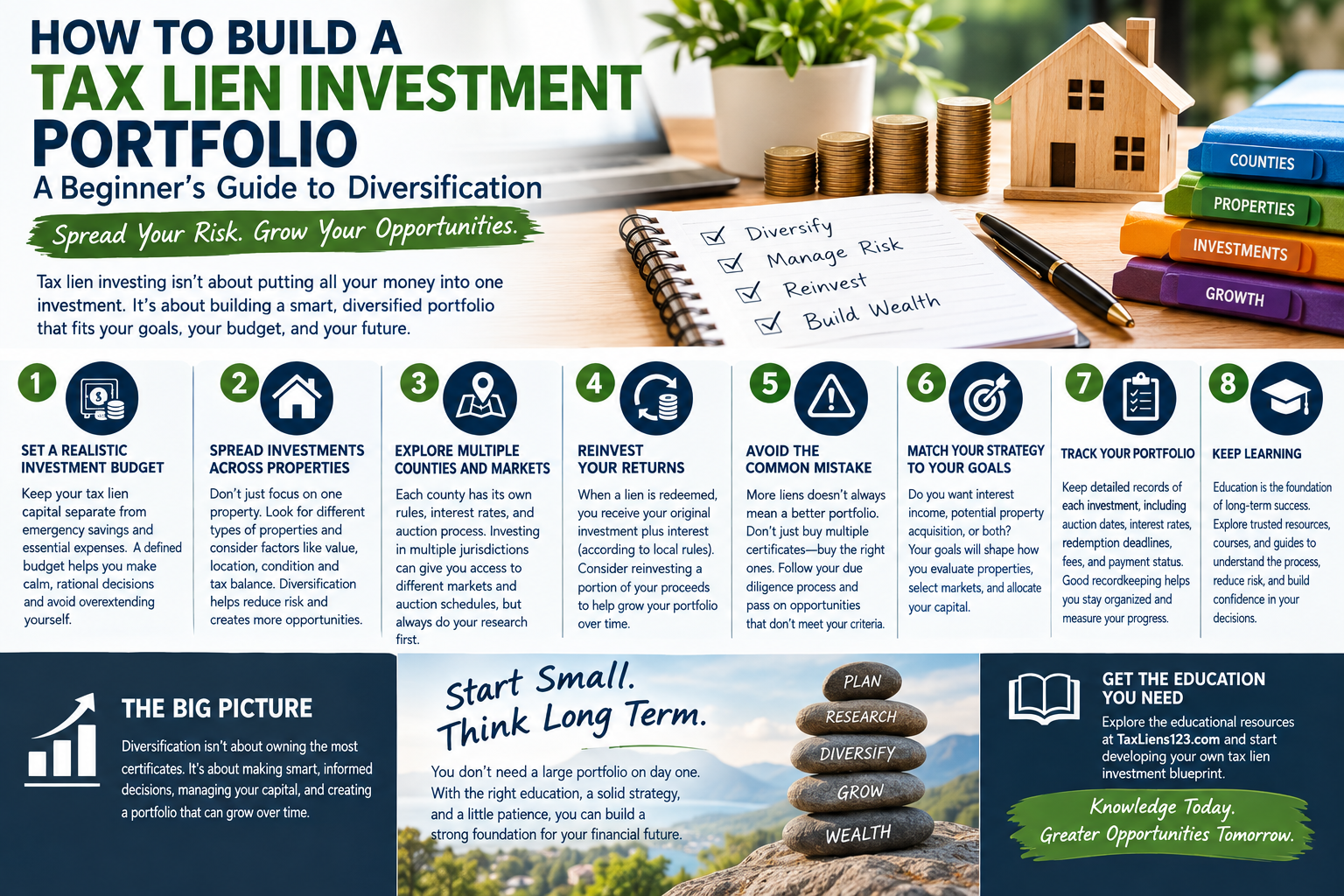
Many experienced investors gradually build larger portfolios by reinvesting returns over time.
Time Commitment
Time is another important consideration.
Rental properties can demand attention throughout the year. Maintenance requests, lease renewals, tenant screening, accounting, and unexpected repairs all require ongoing involvement.
Tax lien investing typically shifts most of the work to the research phase.
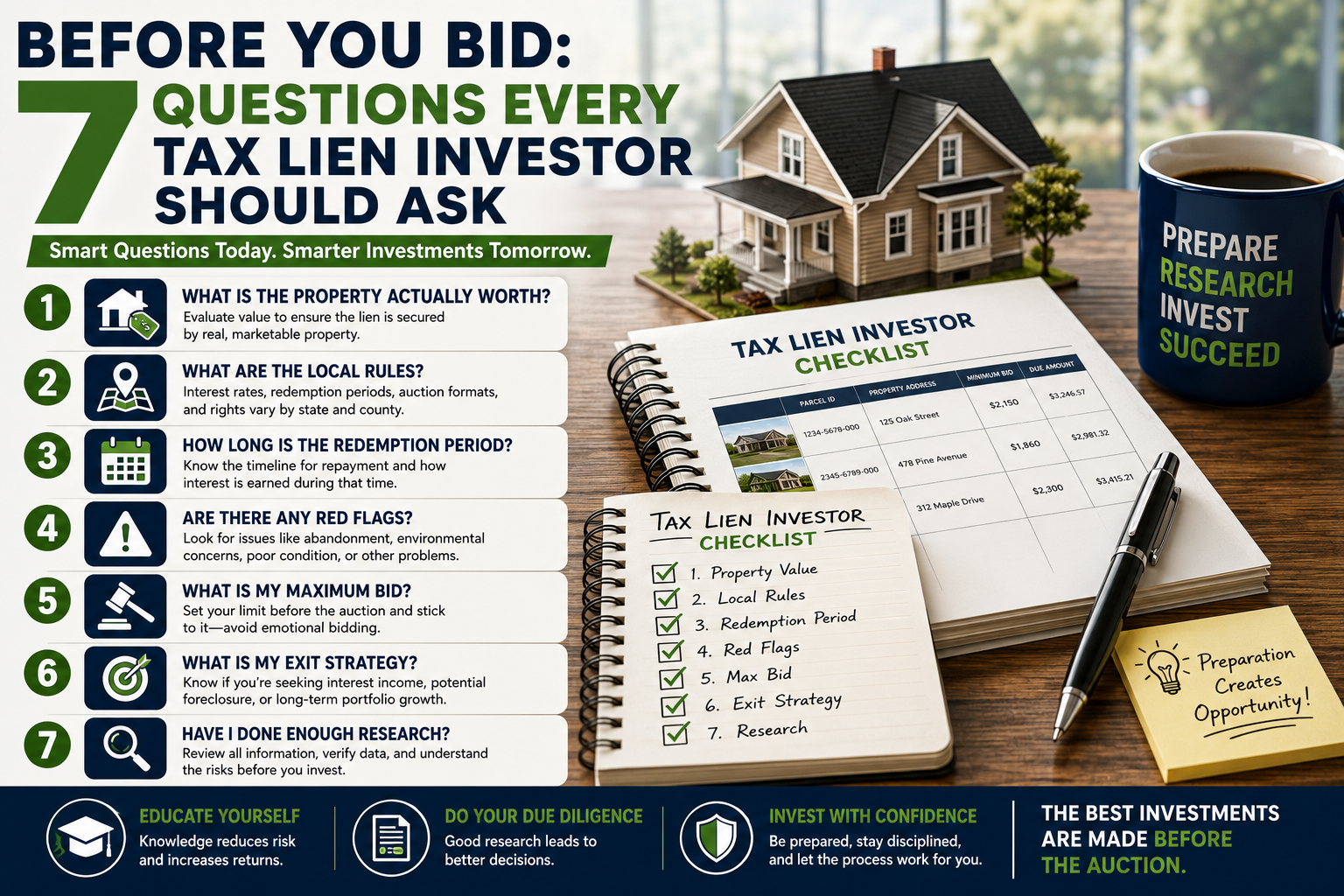
Successful investors spend time studying auction lists, evaluating properties, understanding local regulations, and developing bidding strategies before auctions begin.
Once a lien has been purchased, there is often much less day-to-day management compared with owning rental property.
Understanding the Risks
No investment is risk-free.
Rental property owners may experience vacancies, expensive repairs, declining property values, or difficult tenants.
Tax lien investors face different challenges, including overbidding, purchasing liens on undesirable properties, changing local regulations, or insufficient due diligence.
In both cases, education and preparation play a critical role in reducing unnecessary risk.
The more informed your decisions are, the better positioned you’ll be to achieve consistent long-term results.
Can You Combine Both?
Absolutely.
Many seasoned real estate investors don’t view rental properties and tax liens as competing strategies. Instead, they use both.
Rental properties can provide steady monthly income and long-term appreciation, while tax liens offer another avenue for diversification and potential returns.
Using multiple strategies may help create a more balanced real estate portfolio while reducing reliance on any single investment approach.
Education Comes First
Whether you’re considering your first rental property or your first tax lien certificate, knowledge is your greatest asset.
Understanding local laws, researching opportunities, evaluating risk, and developing a disciplined investment strategy are far more important than chasing the next “hot” opportunity.
The most successful investors aren’t simply the ones with the most money—they’re the ones who consistently make informed decisions.
Which Path Will You Choose?
Both rental properties and tax lien investing have helped investors build wealth for generations.
One offers the experience of owning and managing real estate. The other provides an opportunity to invest in property-backed tax debt without becoming a landlord.
There is no one-size-fits-all answer.
The best investment strategy is the one that aligns with your financial goals, your available time, your risk tolerance, and your willingness to learn.
If you’re looking to explore an alternative to traditional real estate investing, tax lien investing may be the opportunity you’ve been searching for. With the right education, careful preparation, and a disciplined approach, it can become an important part of a well-rounded investment portfolio.