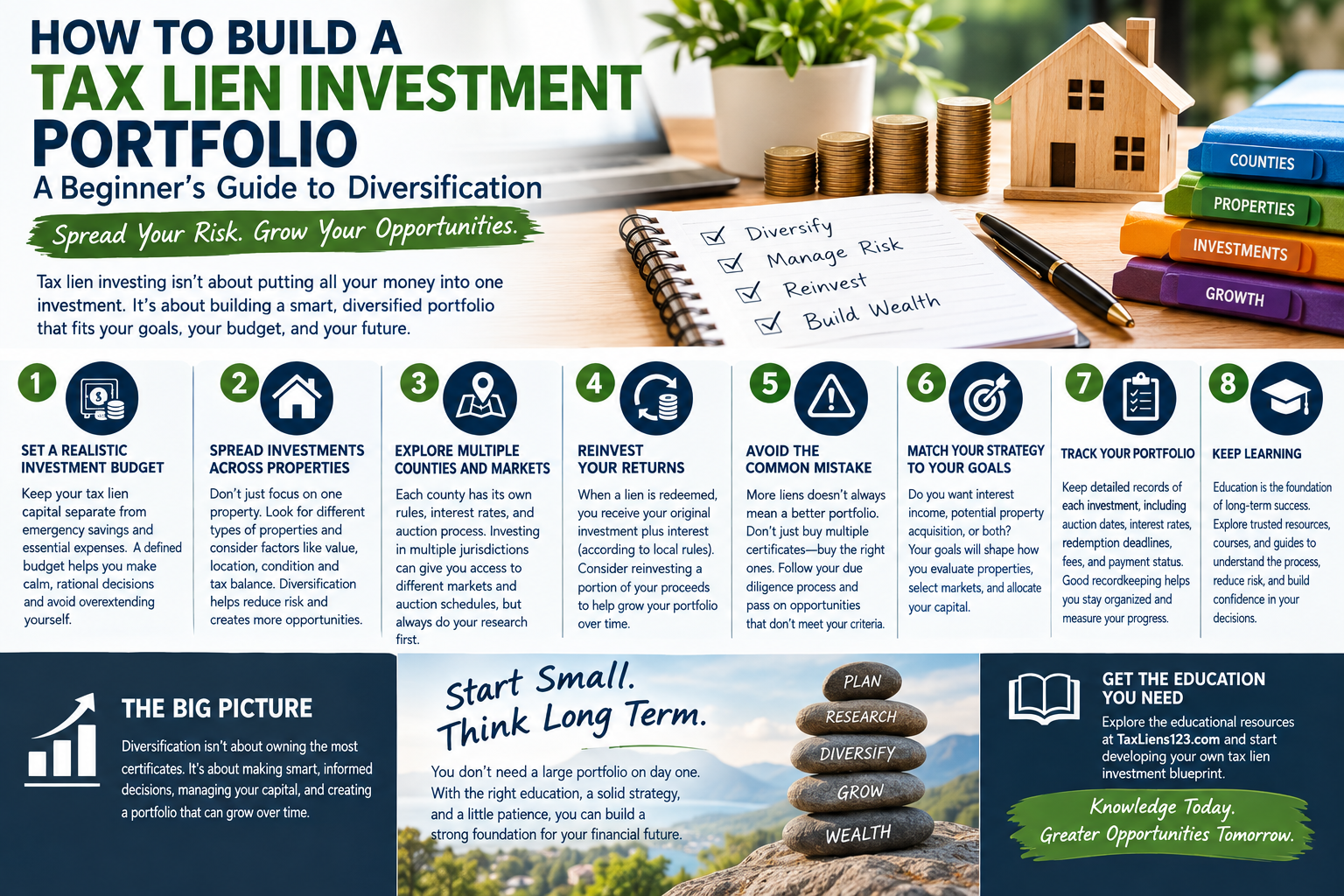
Tax lien investing has earned a reputation as one of the most overlooked opportunities in real estate. Investors are attracted by the possibility of earning attractive interest rates, acquiring property through foreclosure in certain circumstances, and participating in a market that doesn’t always move in step with stocks or traditional investments.
But successful investors know something beginners often overlook: the best opportunities are usually found before the auction starts.
The difference between a profitable tax lien portfolio and a costly learning experience often comes down to asking the right questions before placing a bid. A few minutes of research today can save months of frustration later.
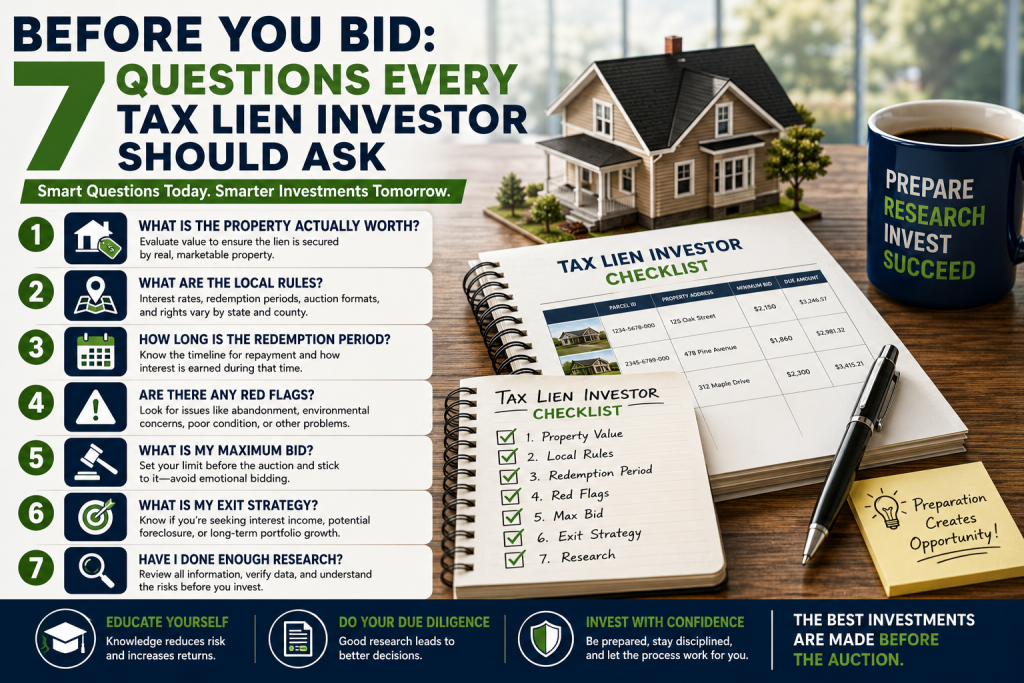
Here are seven questions every tax lien investor should ask before investing a single dollar.
1. What Is the Property Actually Worth?
A tax lien is only as good as the property securing it.
Many newcomers focus exclusively on the amount of taxes owed, but experienced investors start by evaluating the property’s estimated market value. A lien attached to a desirable property typically offers a stronger safety margin than one tied to land with limited value or marketability.
Understanding the property’s worth helps you determine whether the investment fits your goals and risk tolerance.
2. What Are the Local Rules?
Tax lien investing is not the same in every state—or even every county.
Interest rates, redemption periods, auction formats, investor rights, and foreclosure procedures can vary significantly. A strategy that works well in one jurisdiction may be ineffective in another.
Before participating in any auction, make sure you understand the specific rules governing that market. Knowledge of local regulations is often one of the biggest competitive advantages available to investors.
3. How Long Is the Redemption Period?
One of the most important factors in tax lien investing is time.
The redemption period is the timeframe during which the property owner can repay the taxes, interest, penalties, and fees. During this period, investors typically earn interest on their investment according to local rules.
Some investors prefer shorter redemption periods that may provide quicker results. Others are comfortable waiting longer in exchange for different opportunities. Knowing the timeline helps set realistic expectations.
4. Are There Any Red Flags?
Not every lien deserves your attention.
Research should include looking for obvious warning signs such as abandoned properties, environmental concerns, inaccessible land, severe deterioration, or other issues that could impact future value.
A lien may appear attractive on paper while hiding problems that make it far less desirable in reality.
The goal isn’t to find perfect properties. It’s to avoid preventable mistakes.
5. What Is My Maximum Bid?
Auction excitement can be expensive.
Many investors lose potential profits by getting caught up in competitive bidding. Before the auction begins, determine your maximum acceptable bid and commit to it.
This simple step helps remove emotion from the process and keeps your strategy focused on long-term returns rather than short-term excitement.
Discipline often matters more than enthusiasm.
6. What Is My Exit Strategy?
Every tax lien investor should know what success looks like before investing.
Are you primarily seeking interest income?
Are you targeting specific properties that may eventually become foreclosure opportunities?
Are you building a diversified portfolio across multiple counties?
There isn’t one correct answer, but there should be an answer. A clear exit strategy helps guide every investment decision you make.
7. Have I Done Enough Research?
This final question may be the most important.
The most successful tax lien investors are rarely the ones who move fastest. They’re the ones who prepare thoroughly.
They study auction lists, understand local regulations, analyze properties, and continuously educate themselves about changing market conditions.
The more informed your decisions become, the more confidence you’ll bring to every auction.
Turning Questions Into Opportunity
Tax lien investing offers unique opportunities, but opportunity alone is never enough.
Success comes from combining education, research, patience, and discipline into a repeatable process. Asking the right questions before bidding helps reduce risk and increases the likelihood of making sound investment decisions.
Every experienced investor started as a beginner. The difference is that successful investors learned to slow down, gather information, and make decisions based on facts rather than assumptions.
Your Next Step
Before your next auction—or your first one—create a simple checklist built around these seven questions.
Review every potential lien against that checklist.
Over time, you’ll develop stronger instincts, better research habits, and greater confidence in your investment decisions.
In tax lien investing, the auction may be where the purchase happens, but the real profit is often made during the preparation that comes before it.